
Quick Answer
NRI owners manage property documents most effectively when every Mumbai flat has a secure folder structure, consistent file names, and a routine for adding new records. Keep ownership papers, agreements, society correspondence, inspections, handovers, and repair evidence separate but easy to retrieve.
Introduction
For NRI property management in India, scattered documents create avoidable delays when a tenant, society office, or vendor needs an answer. Start with one cloud storage location, scan important paper records, and give every file a name that identifies the flat, document type, and date. Limit access to people who genuinely need it, such as a trusted family member or local coordinator. A missing handover photo or society acknowledgement can become difficult to reconstruct from another country.
Key Takeaways:
- Store one complete digital record for each Mumbai flat.
- Use consistent names so urgent documents are easy to find.
- Update records after every agreement, inspection, repair, and handover.
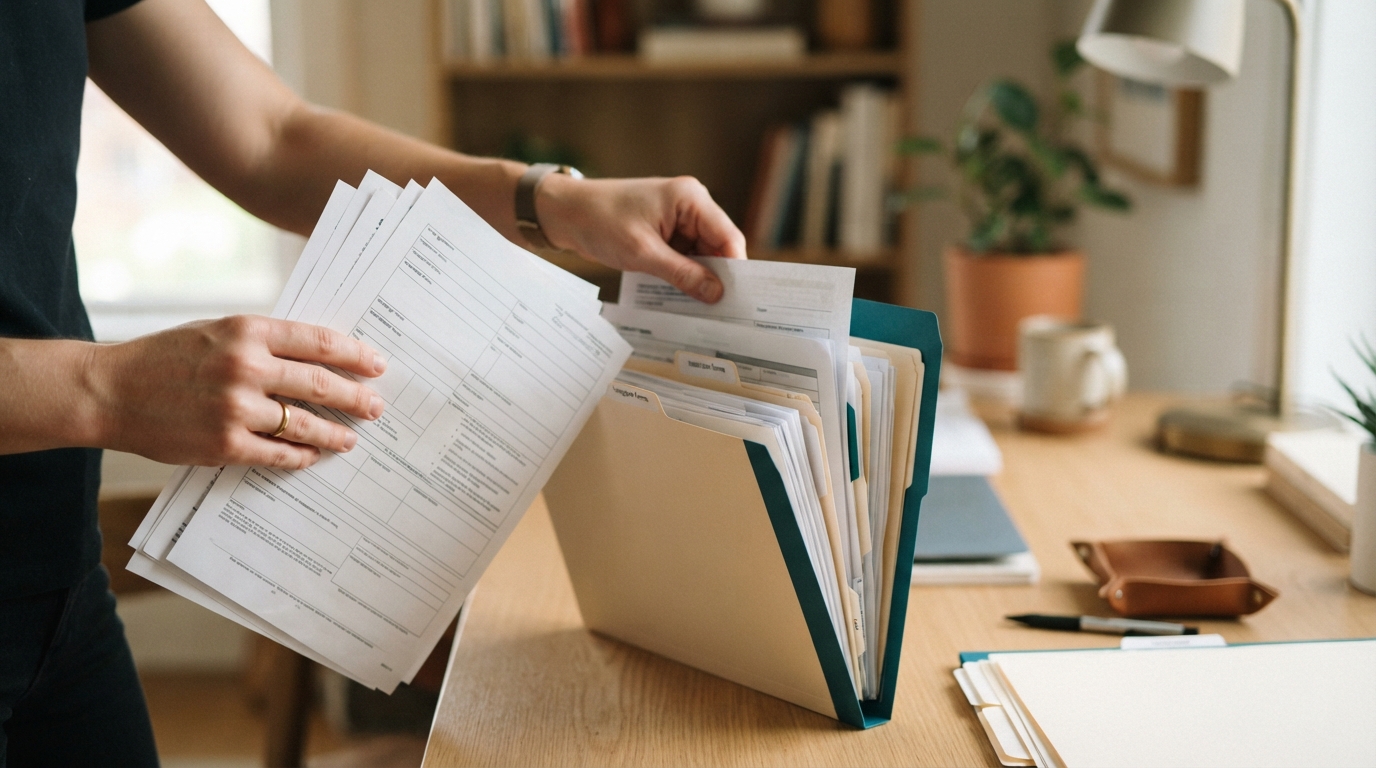
Digital Property Document Management for NRI Owners
Build folders around the events that happen during ownership, rather than saving everything in an email inbox or WhatsApp chat. This approach gives you a clear history of the flat, even when tenants, vendors, or family members change.
Set up folders for each property record
Create a parent folder using the building name and flat number, then add subfolders for ownership, tenancy, society, inspections, repairs, finance, and handovers. Meaningful folders and brief, standardised names improve retrieval, while confidential details should not appear in file names.
- Ownership: Sale deed, tax receipts, and identification copies.
- Tenancy: Agreement, tenant documents, and rent terms.
- Society: NOCs, emails, forms, and payment acknowledgements.
- Condition: Inspection photos, reports, and meter readings.
- Repairs: Quotes, approvals, invoices, and completion photographs.
Name files for fast retrieval
Use a repeatable format such as FlatNumber_DocumentType_YYYY-MM-DD_V01, for example, B1204_Inspection_2026-10-05_V01. Clear file naming conventions reduce duplicate records and make chronological sorting easier. Store the signed leave and license agreement as a separate final file, rather than overwriting drafts.
Keep Your Mumbai Rental Property Records Current
A document system only helps when it reflects the flat's current condition and obligations. Assign each new item to a folder immediately after it is received, approved, signed, or photographed, then keep a short index file showing what is pending.
Capture evidence at tenancy milestones
Before move-in, save the tenant's submitted papers, society communications, agreement copies, and a dated property inspection report. During the tenancy, preserve repair requests alongside approvals, vendor invoices, and completion photographs, because the sequence matters when reviewing responsibility later.
At move-out, place key-return confirmation, utility readings, condition photographs, and signed notes in a folder for the rental handover checklist. Retain a protected record copy separately from working drafts, and limit access on a need-to-know basis.
Use a simple review and access routine
Review the folder after every tenancy change, inspection, society request or completed repair, and replace unclear scans with readable copies. Use the same date, flat identifier and document type in file names so authorised relatives and local coordinators can locate the correct record.
When Local Owner-Side Coordination Helps
Remote owners can digitise documents themselves, but local follow-through is useful when originals, signatures, society submissions, inspections, or vendor visits require someone in Mumbai. Society paperwork should be recorded with submission receipts and written responses, not left only in a message thread.
Turn local activity into owner records
Ask the person handling an on-site task to send a scanned document, dated photographs, and a short written note describing what happened. This converts informal updates into a usable record and prevents the owner from relying on memory during a renewal, repair query, or property sale.
Keyhold supports Mumbai owners with local coordination for inspections, tenant matters, repairs, paperwork, and handovers, so documents from these activities can remain organised for the owner. A local partner should provide records that explain both the action taken and the proof attached.
Protect access without creating bottlenecks
Use a secure account with strong passwords, recovery details you control, and limited sharing permissions for family members or coordinators. Keep an offline encrypted backup of essential ownership and agreement records, because retrieval depends on both access and preservation.
Protect the Document Folder
Use individual accounts, multi-factor authentication and access limited to each person's task. Keep original executed records and a backup; a shared scan is not a substitute for every original. Avoid placing identity documents in open chat groups or broadly shared links, and remove access when a coordinator's work ends.
Conclusion
Organising property documents is not about creating more paperwork. It is about creating one dependable record for every stage of ownership, tenancy, maintenance, and handover. Begin with a clear folder structure and naming rule, then make updates part of each local activity. Keyhold is a practical choice for NRI landlords in Mumbai who need owner-side coordination that produces clear inspection, repair, and handover records.
Need local help keeping your records current? Keyhold provides Mumbai property coordination.
Frequently Asked Questions (FAQs)
How can NRI landlords organize property documents for Mumbai flats?
NRI landlords can organize property documents for Mumbai flats by creating one secure cloud folder per property, grouping files by ownership, tenancy, society, repairs, and handovers, and using the same file-name format for every scanned record.
How can rental property in Mumbai be managed from abroad?
Managing rental property in Mumbai from abroad requires a digital record system plus a reliable local contact who can collect documents, attend inspections, coordinate repairs, and send written updates with supporting photographs and copies.
What documents are needed for rental property management?
Rental property management records should include ownership proof, tax receipts, tenant identity documents, the signed agreement, society correspondence, inspection reports, repair approvals, invoices, payment records, and signed handover confirmations.
How can you digitize rental property records in India?
Digitize rental property records in India by scanning documents into readable PDF files, photographing condition evidence clearly, saving each item in its category folder, and retaining original papers securely when they remain important.
Why is local property coordination important for NRIs?
Local property coordination is important for NRIs because society offices, tenant handovers, inspections, vendor visits, and original paperwork can require physical follow-up that cannot be completed reliably through messages alone.